



Many customers tell us:
“We like working with professional suppliers because it makes everything easier.”
But what does “professional” really mean?
For us, professionalism is not just about providing competitive prices or fast production.
It means having a clear quality control process, understanding customer expectations, and making sure every shipment meets the required standards before it leaves the factory.
Today, we would like to share how we inspect and prepare cat litter orders before delivery, using a recent OEM project for an overseas customer as an example.
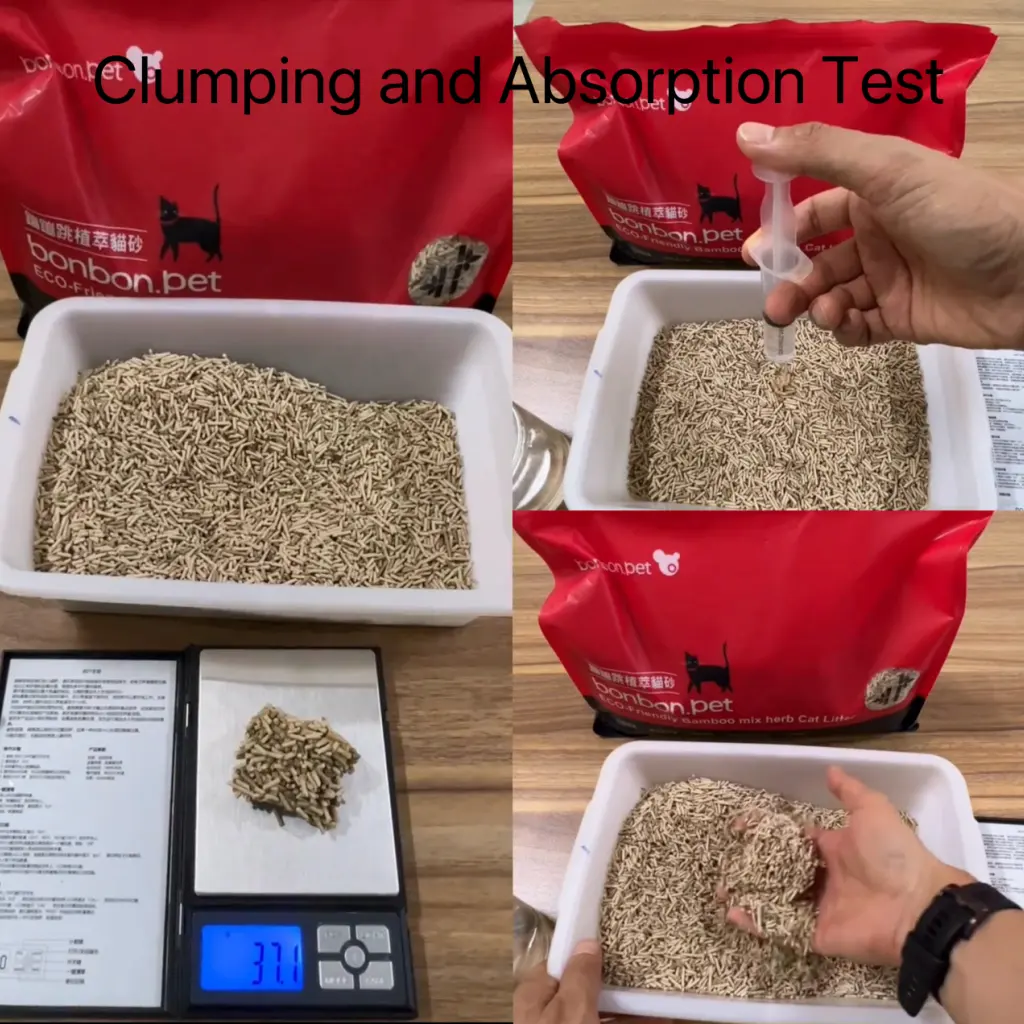
1. Clumping and Absorption Test
Before shipment, the first step is to conduct a water absorption and clumping test.
This simple but important test allows both our team and customers to evaluate:
- Whether the clumps remain firm after absorbing liquid
- Whether the litter is easy to clean
- How much water the product can absorb
- The actual weight of formed clumps
A good cat litter should not only absorb liquid but also form stable clumps, helping reduce waste during daily use.
For overseas brands, this test provides confidence that the product performance matches expectations before mass shipment.
2. Dust Control Testing
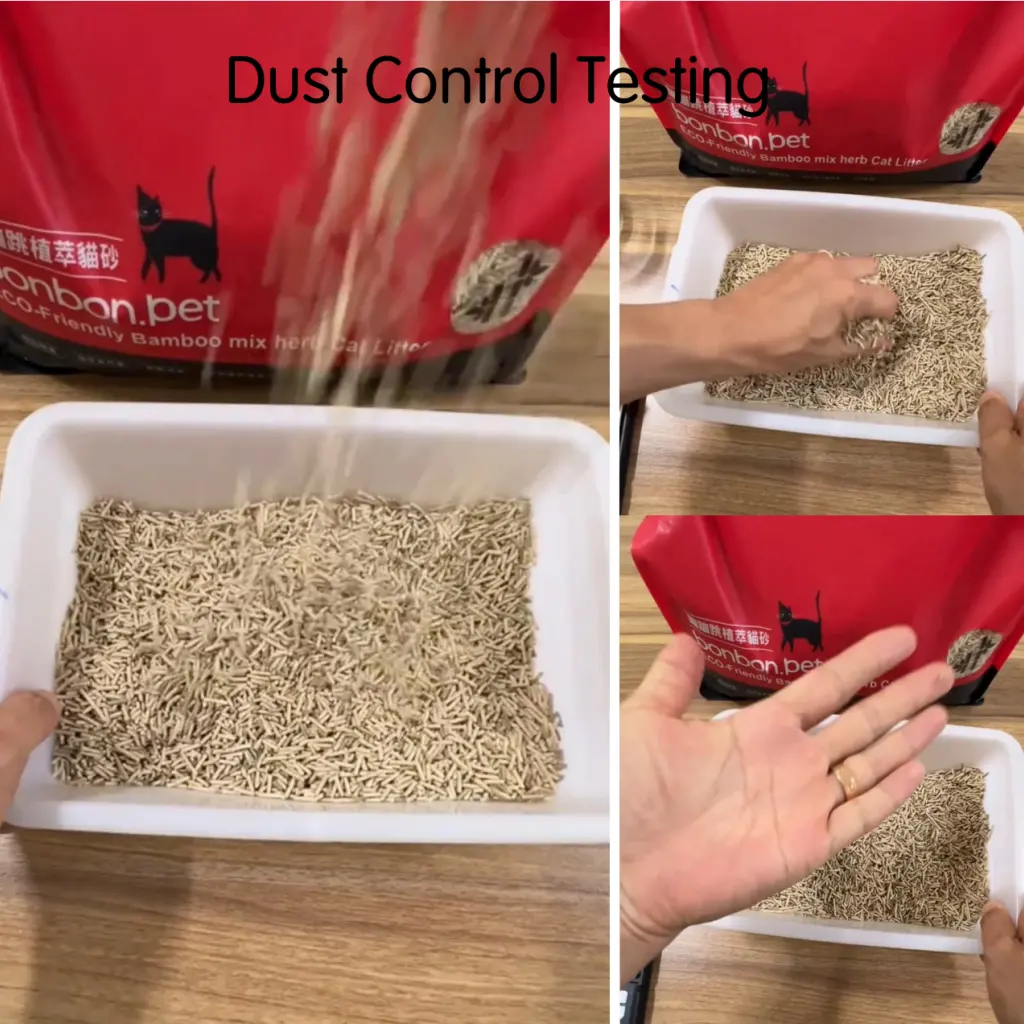
Dust performance is another key quality indicator for cat litter.
During daily use, consumers will repeatedly pour, scoop, and replace cat litter. Excessive dust can negatively affect the user experience.
Therefore, we evaluate dust performance through multiple methods:
Manual friction test
We check the surface condition of the granules through handling and friction.
Simulated pouring test
We test the product from a certain height to observe whether excessive fine particles are generated.
These practical checks help us evaluate whether the product maintains good cleanliness during transportation and everyday use.
3. Moisture Content Inspection
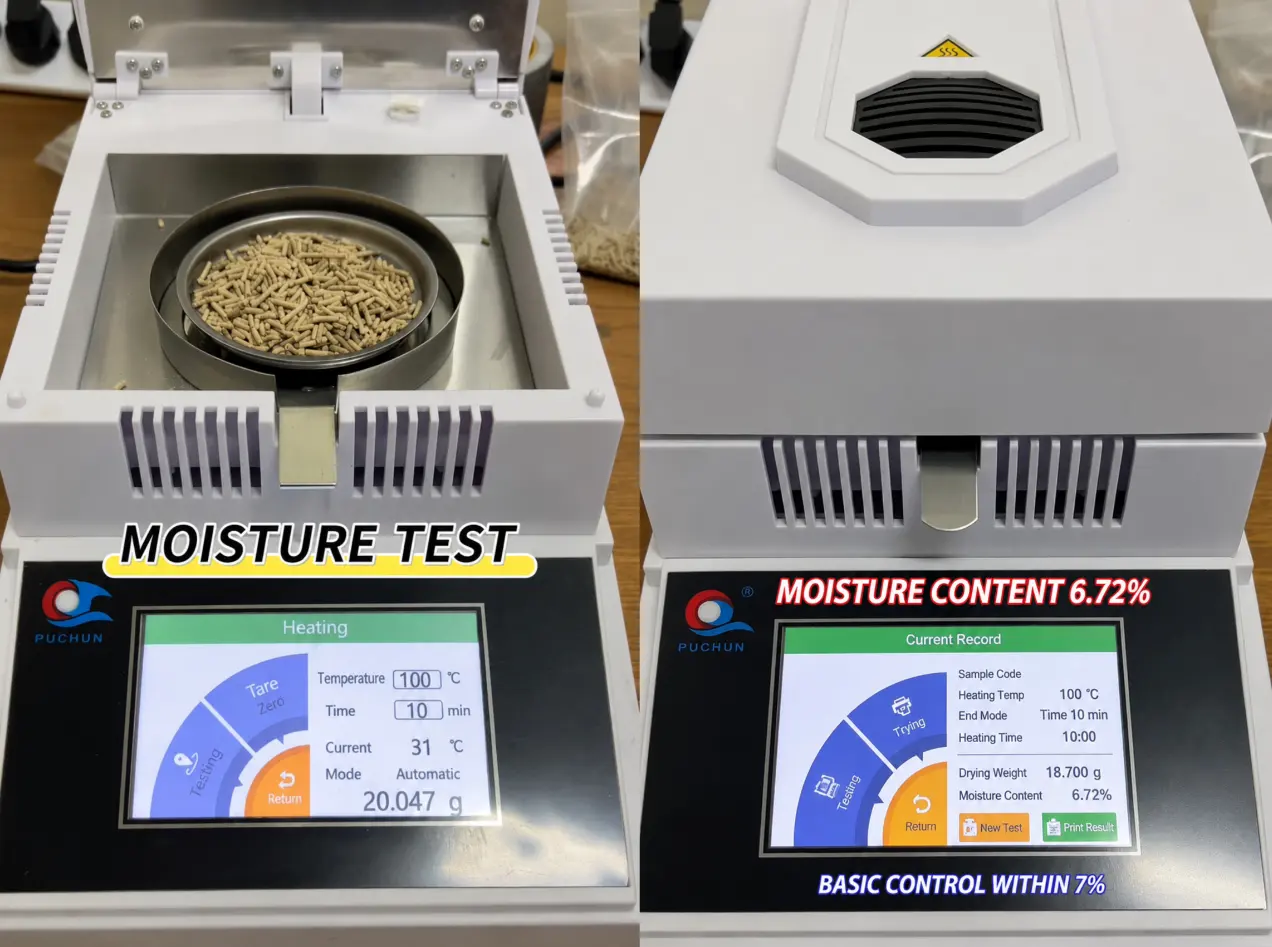
For plant-based cat litter, moisture control is especially important.
Before shipment, we use testing equipment to measure the moisture content of the product.
Our target is to maintain moisture content below 10%, and our current production is usually controlled below 7%.
Proper moisture control helps:
- Reduce the risk of mold during storage
- Maintain product stability
- Improve clumping performance
- Keep the litter dry and comfortable for cats
For international shipments, where products may spend weeks in transportation and warehouses, moisture management is a critical quality factor.
4. Transportation Simulation Test
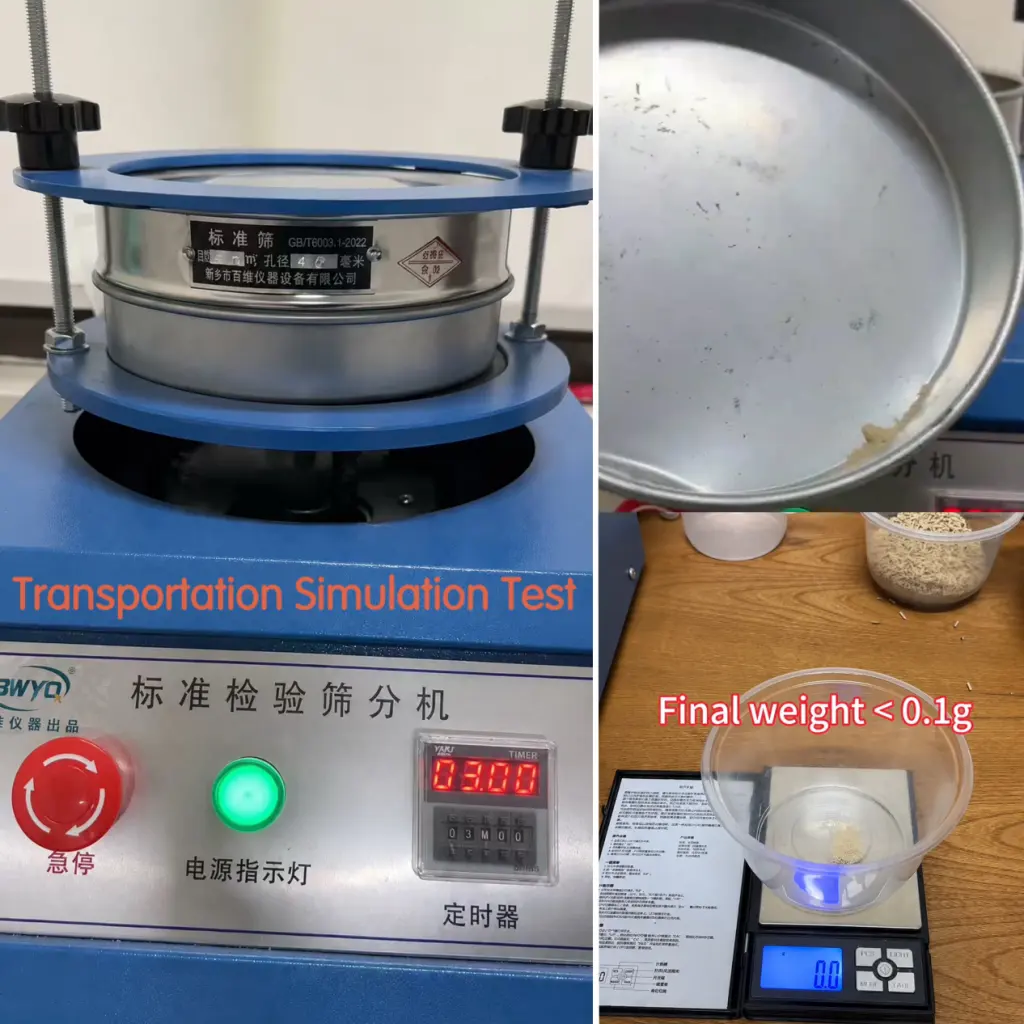
During international shipping, products experience vibration, handling, loading, and unloading.
To simulate these conditions, we use vibration screening tests to evaluate product durability.
After several minutes of high-frequency vibration, we check the amount of generated powder.
Our standard is to control powder loss within 0.1g per 100g of cat litter during the test.
This helps ensure that the product arrives at the customer's warehouse in good condition, maintaining the expected appearance and performance.
5. Shipment Documentation and Final Confirmation
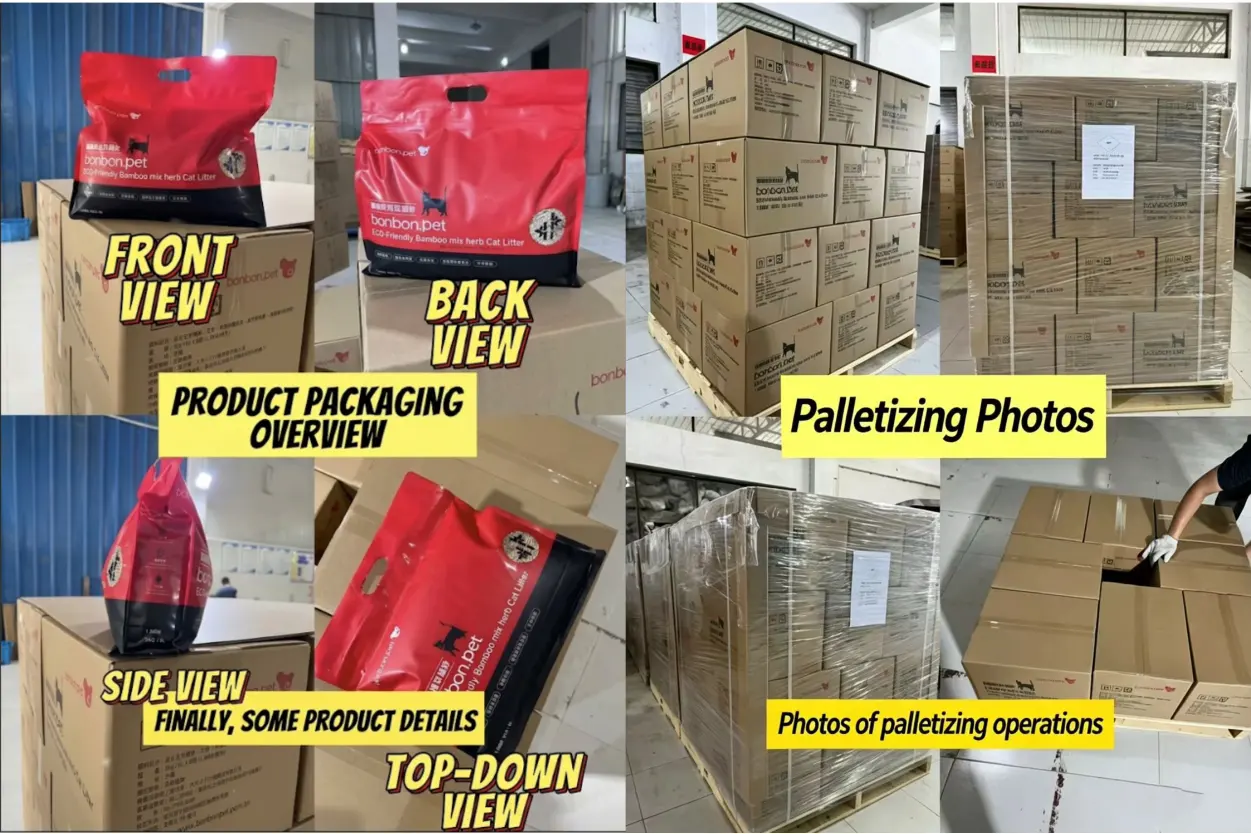
Before shipment, we also provide customers with:
- Product photos
- Packaging confirmation
- Pallet loading photos
- Shipment details
For overseas customers, transparency is extremely important.
A professional supplier should not only manufacture products but also provide clear communication throughout the entire process.
Professional Service Comes From Attention to Detail
We do not believe professionalism is something that should simply be claimed.
It is built through every small action:
- Testing before shipment
- Understanding customer requirements
- Controlling production details
- Communicating clearly
- Taking responsibility for every order
For us, quality control is not an additional step.
It is part of the product itself.
Because a successful partnership is not only about delivering cat litter.
It is about helping our customers build reliable products and brands in their markets.


